The City That Isn’t There
Alexander Shumskikh
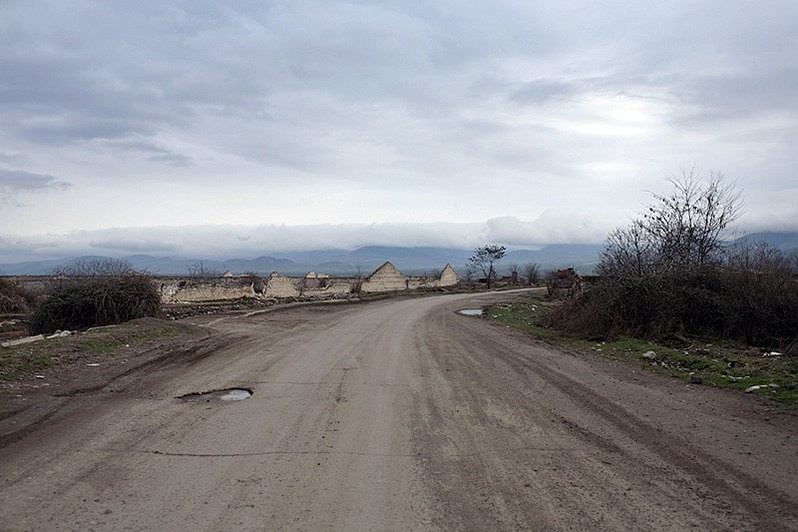
City of X, Armenia. March 2007
Many people in Armenia are overcome by a sense of incompleteness—whenever they hold Armenian books in their hands or hear the melody of the Armenian language. This is because they are unfamiliar with the ornamentation of the letters, the melody of the sounds, and the chants of the Armenian Liturgy. Because the richness of Armenia’s verbal heritage is everywhere: in church services and in the speech of the working people, in the eyes of peasants and artists, in the films of Parajanov and Peleshyan. And that is why the Word in Armenia is mightier than the sword. Lost lands, lives cut short, the distant Ark rise up in the eternal return of the Word, and there is no end to Armenian history.
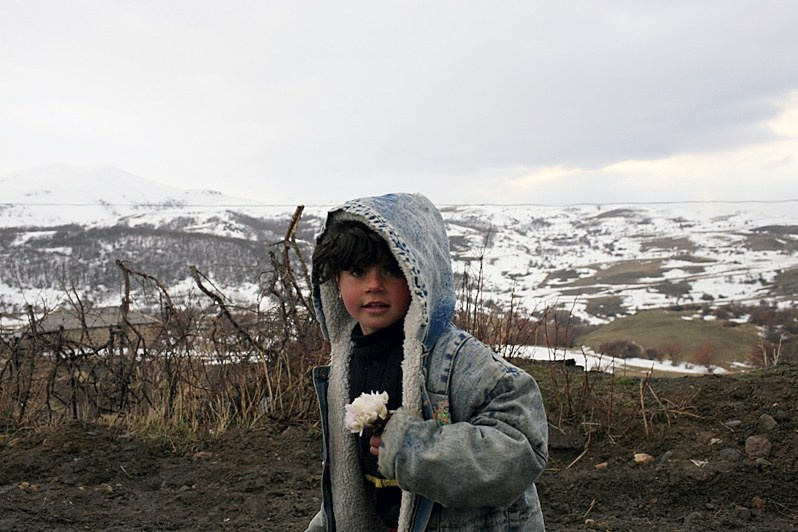
City X, Armenia. March 2007
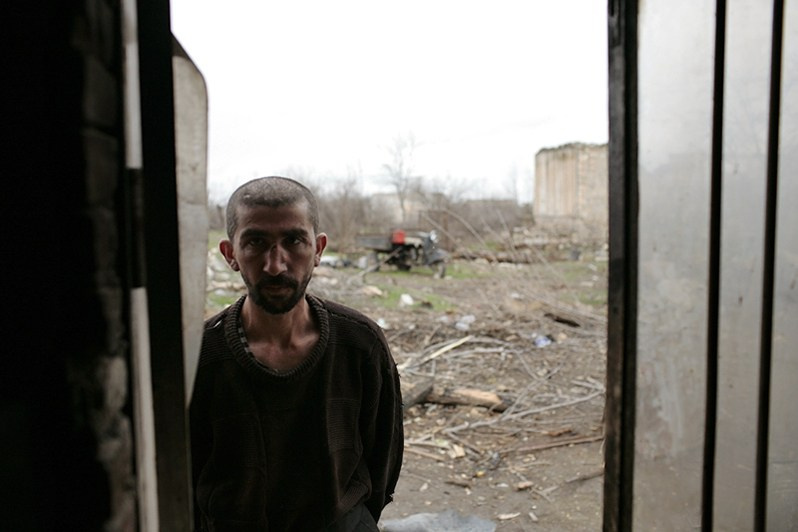
City X, Armenia. March 2007
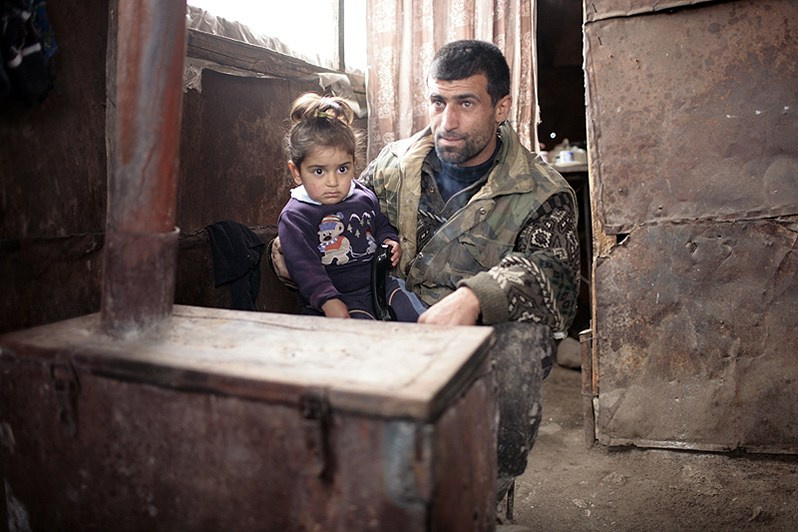
City X, Armenia. March 2007
And how could one not be particularly grateful to Thomas J. Samuelian, who introduced English readers to the mournful hymns of Grigor Narekatsi, a monk who, a year before his death, completed his great work—a book that subsequently came to be regarded by the people as on a par with Psalter of David:
May it not be mine to labor, and not bring forth,
To weep, and not shed tears,
To meditate, and not sigh,
To gather clouds, and not rain,
To travel, and not arrive,
To call, and You not hear,
To implore, and remain ignored,
To groan, and not be pitied,
To pray, and gain nothing,
To offer sacrifice, and it not consume by fire,
To see You, and leave empty-handed.
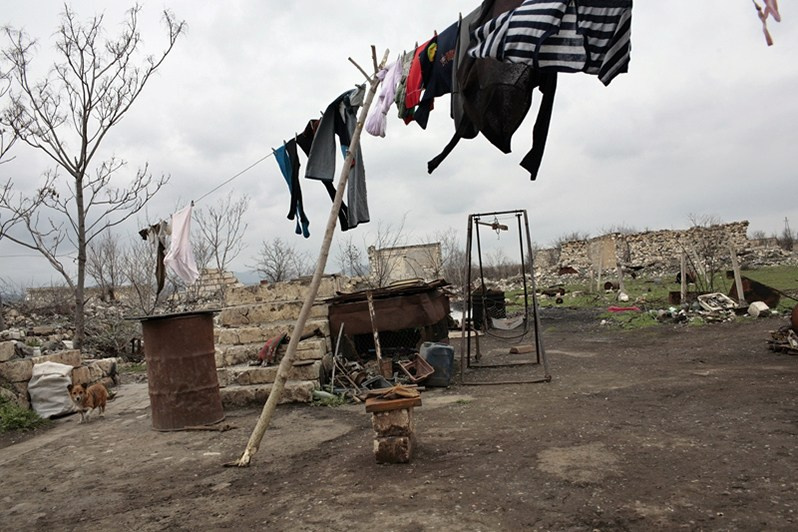
City of X, Armenia. March 2007
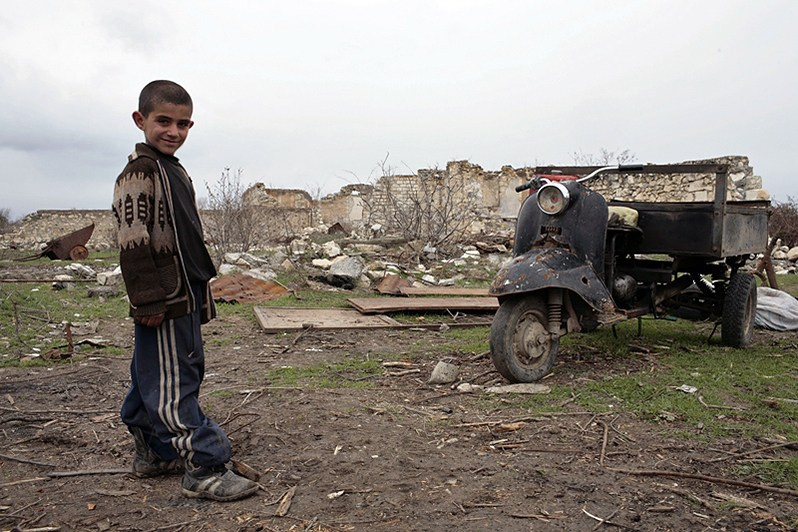
City of X, Armenia. March 2007
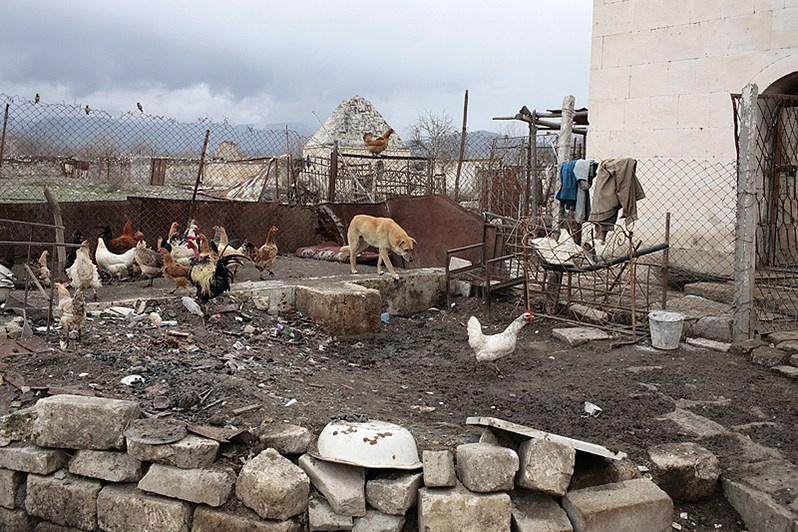
City of X, Armenia. March 2007
Our brothers in faith, who embraced Christianity as far back as the year 301 AD, were forced to bear the heavy burden of exile and martyrdom. Century after century, the people, driven from the fertile plains into the mountains, slaughtered by the hundreds of thousands, learnt patience and hard work. Surrounded by enemies, on whom can a person rely? To whom should one offer a sacrifice? With what fortitude does the Orthodox Christian recite the Creed, repeating it word for word?
It will come as a revelation to many that, throughout their history, the Armenians have never taken up arms against the Russians. And even now, every now and then, you hear: ‘We share the same tsar. Our tsar is Putin.’ And if we are their friends, then who are they to us, and what is this ‘kingdom’ we share?
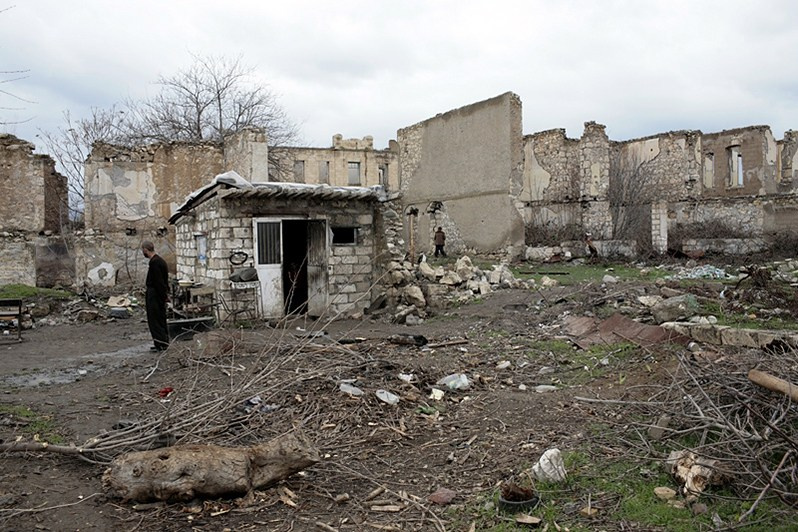
City of X, Armenia. March 2007
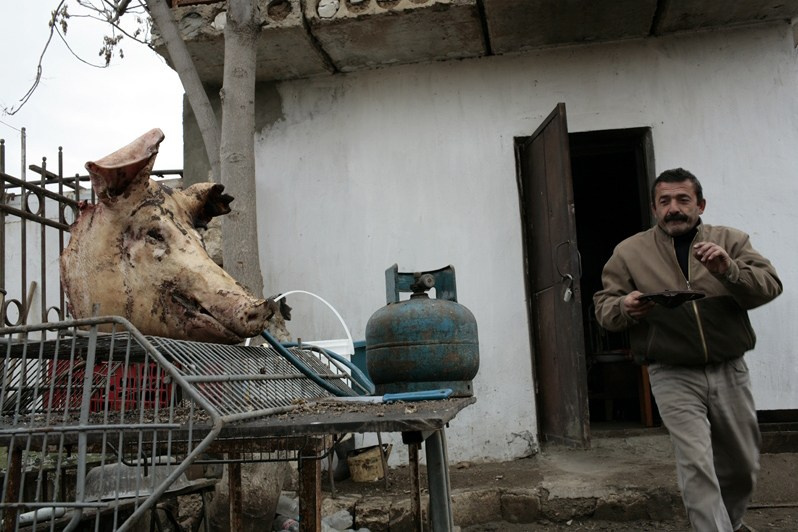
City of X, Armenia. March 2007
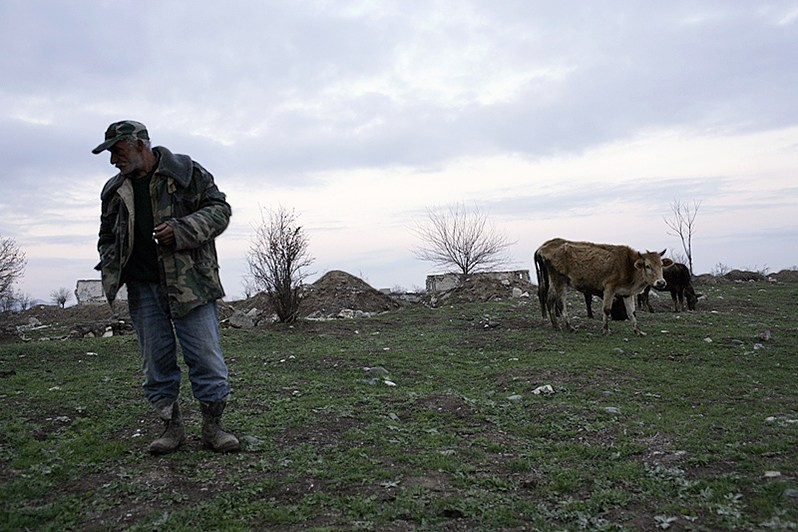
City of X, Armenia. March 2007
The collapse of the Soviet Union changed Russia, but it changed Armenia even more. Misfortune, which never comes alone, brought with it the horror of the December 1998 earthquake, and then war. A war the Armenians could not lose—so strong had the people become in their unity. The years of confrontation between unarmed soldiers and the Azerbaijani OMON and Soviet troops, brought in by Gorbachev to maintain the ‘special administration’ regime, were marked by pogroms in Sumgait and Baku, the expulsion of Armenians from Karabakh villages, and the incessant shelling of Stepanakert.
In those days, Russians were fighting on the opposing side… All sorts of Russians… There were some who are remembered with gratitude, such as the pilots who bombed Machkalashen. According to Pavel Avetisyan, the village headman, the bombs were dropped on the outskirts: “The planes bombed us. They didn’t hit a single house, as if on purpose. We think those were Russian pilots.” There were also those who, after completing their service in the armed forces, defected to the Armenian side, and there were Cossacks… There were those who tried to prevent the massacre and protected both Armenians and Azerbaijanis. But there were also those who fought “for the Azeris, for money”. “We don’t condemn the Russian soldiers; they were serving under orders.”
On the night of 9 May 1992, the Karabakh forces took Shushi; a year later, Agdam; and gradually the war began to peter out. A security zone formed around Artsakh, formally part of Azerbaijan: a desolate, alienated land where few particularly wish to live. “We don’t need what’s not ours”—words often heard in Armenia. One might think that an enraged people, filled with resentment over the violence and killings, would seek indiscriminate revenge, but no—in Agdam, a mosque stands untouched.
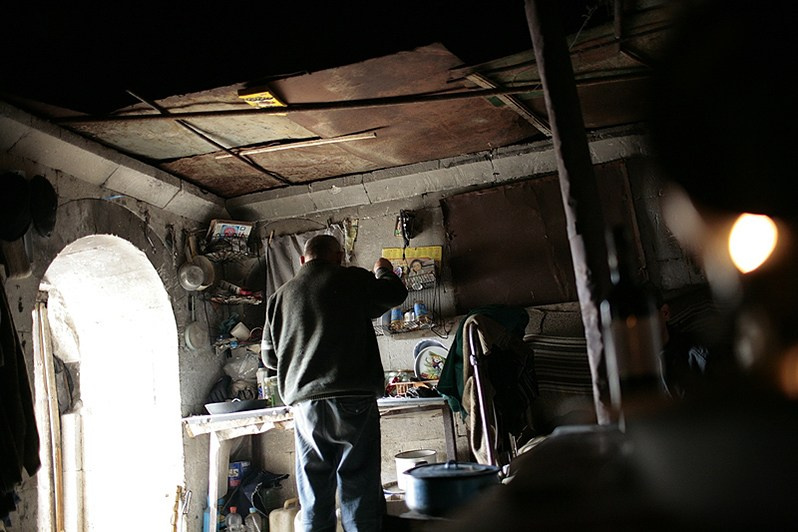
Город Икс, Армения. Март 2007
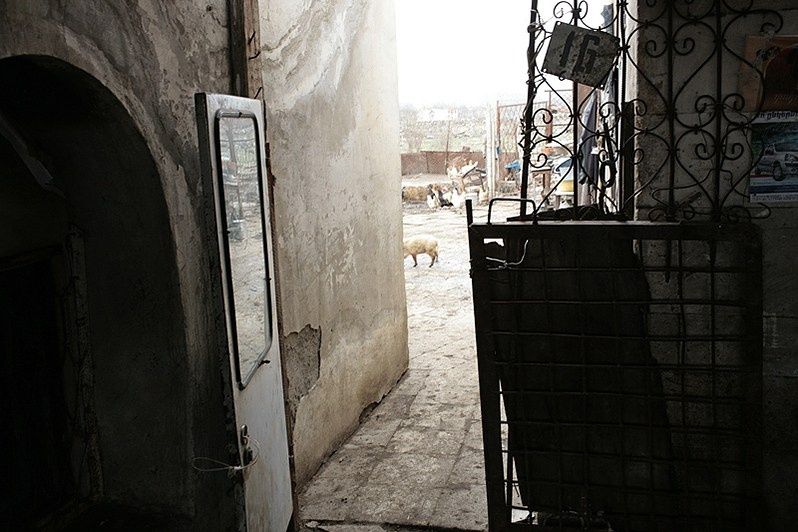
City of X, Armenia. March 2007
City of X, Armenia. March 2007
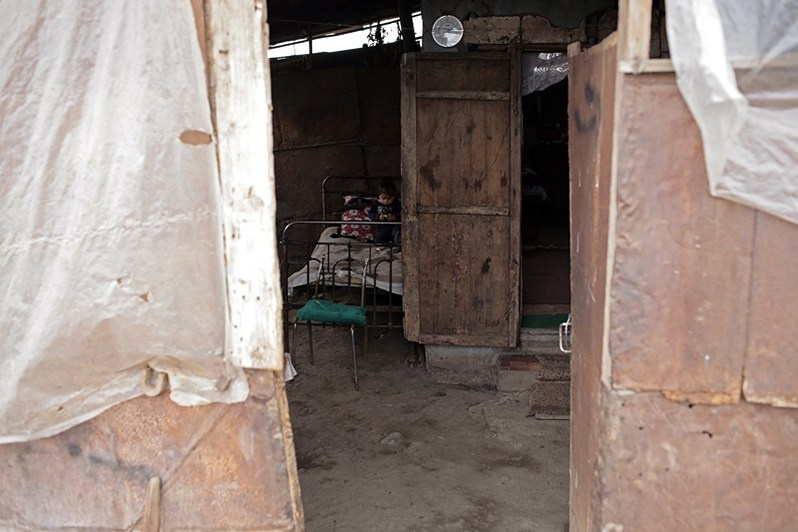
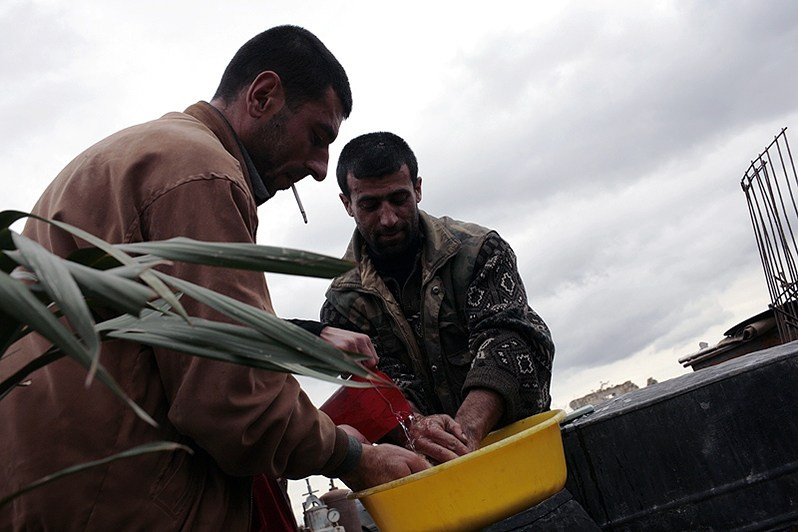
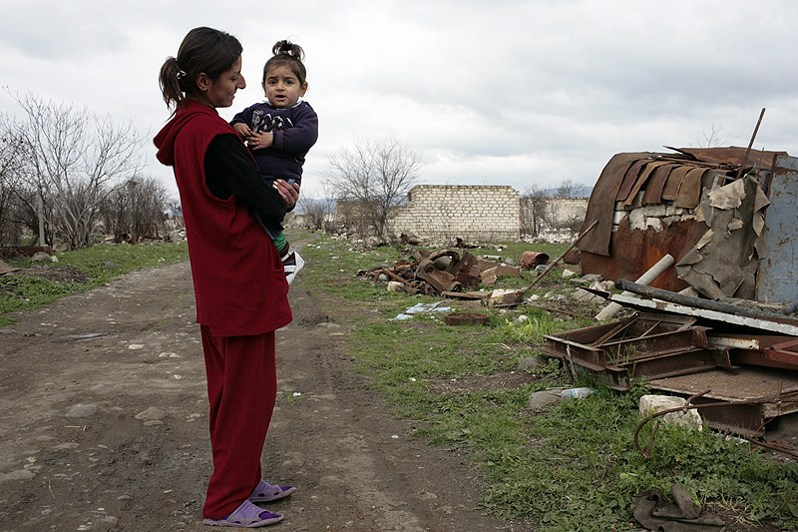
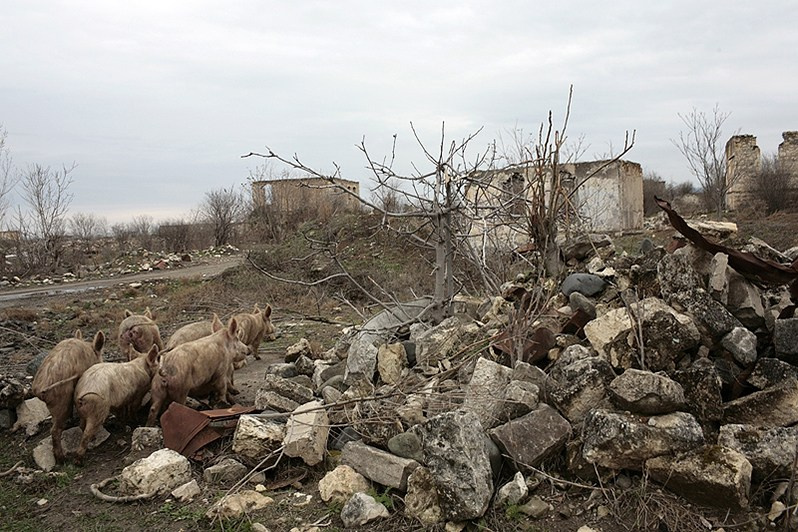
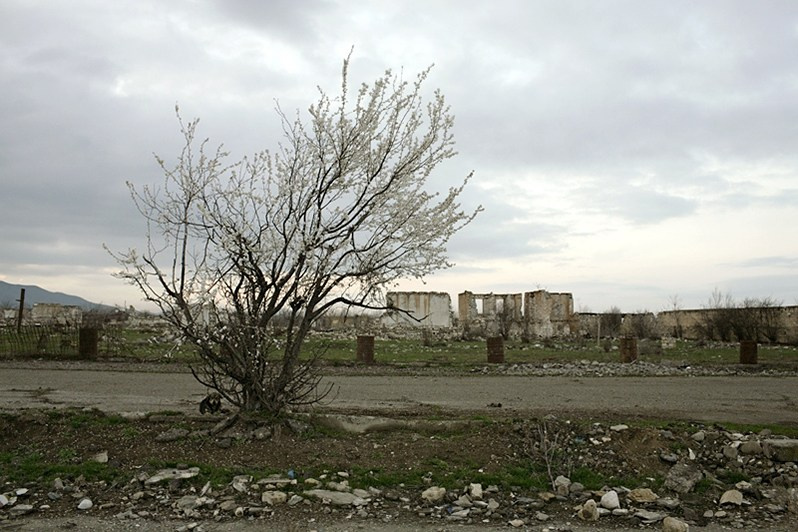
These ghost towns and villages, with their abandoned houses, are unlikely to rise from the ruins any time soon; it is still unsafe to be in the area: despite the work of HALO TRUST, the land is littered with mines, and the few who dare to live in such settlements dwell in makeshift huts, without water or electricity, treading carefully and dreaming of a life on a farm in a proper village. The head of the Garnika family (or rather, two families: it’s easier to live by helping one another), who has lived for ten years in a makeshift hut with a potbelly stove in the middle, will see his plans to move to a proper village come to fruition next year: in Vazgenashen, they are being given a house and land. “We lived a normal life. It was lovely here. Then all this happened. Why did this massacre start?”—they didn’t want to fight, but they couldn’t avoid it—“When they were captured, their houses were set alight, so they left. But why did they slaughter us? There was an agronomist here; he slit a thirteen-year-old boy’s throat. The court was bought; they were going to acquit him. The Armenians found out and burned him alive.”
Memories of the war will linger for a long time yet; mutual animosity will last for more than a century. It is hardly possible to eradicate historical grievances, or even hatred, in one fell swoop, in a crude Soviet-style manner, as under Gorbachev. The war is over, but there is no peace, and who knows whether the fire might not flare up again with a new, more terrible force: since then, a great deal of weaponry has accumulated, weaponry of a completely different quality.
Город Икс, Армения. Март 2007
Город Икс, Армения. Март 2007
Город Икс, Армения. Март 2007
These days, things are quiet in Armenia. The diaspora and philanthropists are building roads and hotels, and tourists are gradually beginning to arrive in Artsakh. In Gandzasar, thanks to the efforts of Levon Ayrapetian, the ancient monastery of Hovhannes Mkrtich (John the Baptist), in whose crypt, according to legend, the saint’s head is kept, and preparations are underway to open the first seminary in Artsakh (two already operate within Armenia—in Echmiadzin and on Lake Sevan). The diaspora means a great deal to Armenians: Levon Ayrapetian himself, in addition to the monastery in his native village of Vank, has built a woodworking factory, thereby providing work for local residents, and is building a new school. In Vank, there are 280 children out of a population of 1,500—a figure unthinkable for a Russian village, save for the Russian village of Fioletovo near Dilijan, where 35% of the population are children under 16. Every newborn in Vank receives a gift from Levon Ayrapetyan—500 dollars.
The Armenians’ industriousness is enviable: on the farms, the number of cows, goats and sheep runs into the dozens, there are countless poultry, and in the homes, the tables are laden with their own cheese, bread, vegetables and wine; only coffee, without which Armenians cannot live, is bought in shops.
City of X, Armenia. March 2007
Russian is not considered an official language, but it is part of the compulsory school curriculum. In Vanke, people speak with a smile about the popular ‘uprising’ that broke out after Russian language lessons were nearly scrapped.
Russians make up as much as ten per cent of the population in Stepanakert, and the community is planning to build an Orthodox church. For the time being, however, according to Father Minas, the rector of the local church in Stepanakert, Russians come to pray at a small church of the Armenian Apostolic Church, located on the premises of the city theatre.
It is quiet in Armenia today. No, Gyumri has not yet recovered from the tremors, and in Artsakh’s memory, much has been sacrificed to the war… But I really wouldn’t want anyone to disturb this silence…
Alexander Shumskikh 2007