The Man Who Walks the Ice
Bill Shapiro
A conversation with Ragnar Axelsson
The text of the interview was published in The Photographic Index, September 2025
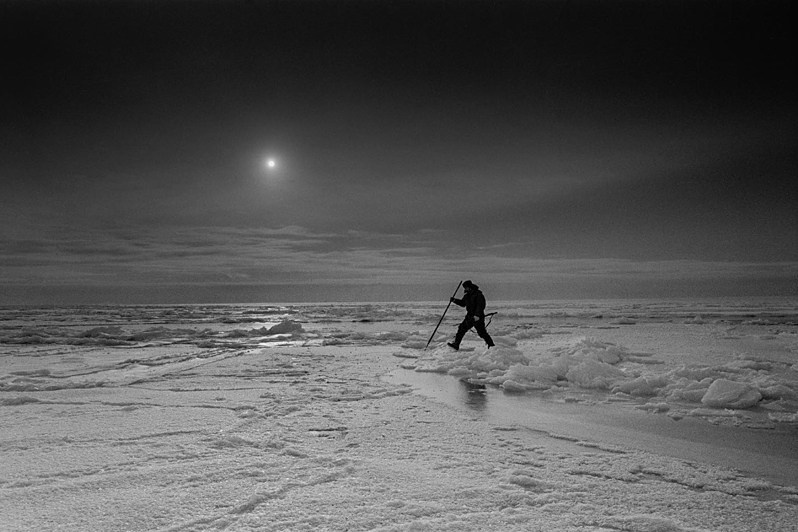
The hunter from Ittoqqorttormiit, Hjelmer Hammeken, Greenland © Ragnar Axelsson
I first came across Ragnar Axelsson’s pictures when—and I will not soft-pedal this—I was properly drunk. My oldest friend had taken me to Reykjavik to celebrate my 40th birthday and celebrating we were. Tumbling out of a bar and into the ethereal post-midnight glow of the Icelandic summer, we lurched toward a public park in order to … I’m not sure what. But in that park, as part of a public art exhibit, there was a series of oversize photographs, and among them, a face, a face that had seen things, the face of Father Time — shrouded in mist and sea foam — somehow walking among us. My friend and I stopped our slurring and stumbling and just stood there. We could not look away.
Over the years, as I became more aware of Axelsson’s work, I learned that it was widely celebrated for its sweeping beauty, for its drama and intimacy, but also for its early and tireless attention to the effects of our changing climate on the glaciers of Greenland. But on that drunken night in the park, I saw something else: an emotional landscape. The topography of loneliness, of rugged self-sufficiency, of an ancient relationship between man and the sea.
Axelsson’s commitment to making pictures in Earth’s most remote, unforgiving places is legendary: He has shot in all eight Arctic countries, spending weeks at time shadowing solitary men across endless sheets of ice in well-below-zero temperatures, often eating nothing but seal meat. It is a path few photographers take.
As fate would have it, almost exactly 20 years to the day after I stumbled upon Axelsson’s pictures in that park, I spoke with the 67-year-old Icelandic photographer (who also goes by “Rax”) over Zoom, about his passion, his preparation, and his incredible commitment to “documenting things that will soon be gone forever.”
This conversation has been edited for length and clarity.
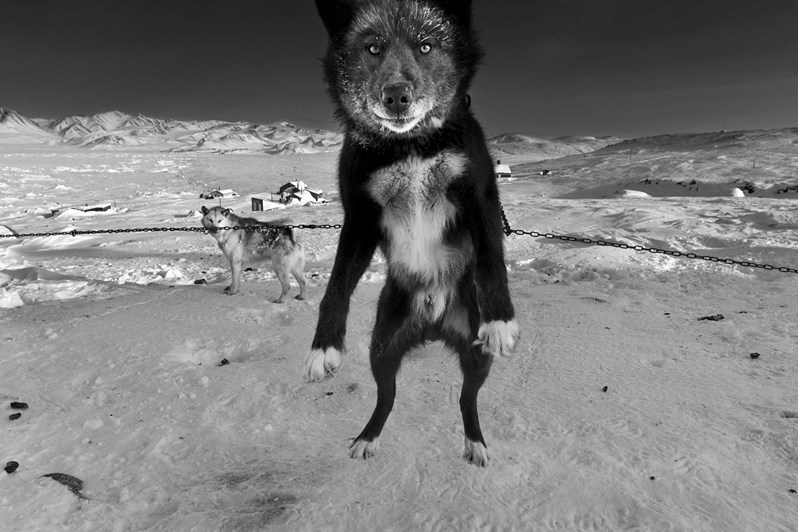
Arctic Heroes, Kape Tobin, Greenland © Ragnar Axelsson
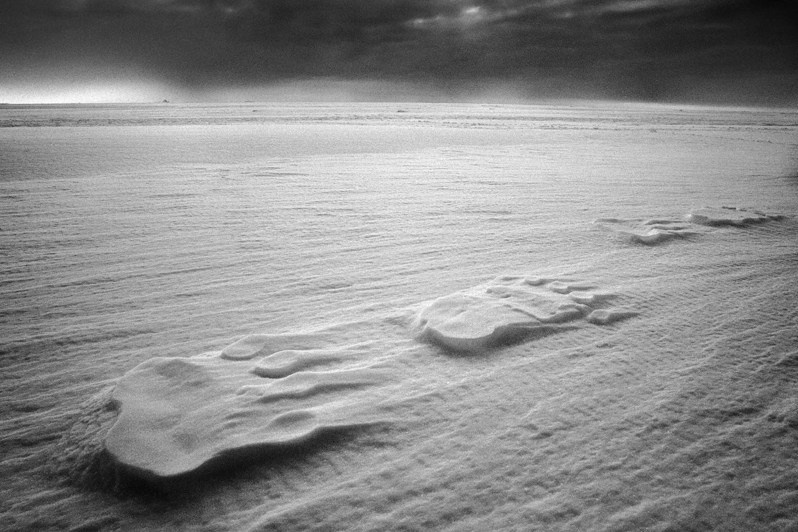
Polar Bear tracks, Greenland © Ragnar Axelsson
Bill Shapiro: I recently learned something about you that surprised me. You’ve produced so much work from areas of the Arctic that are difficult to get to, and so many incredible books, that I assumed this was something you’ve been doing full-time. But all these years you’ve had a day job. You worked at a newspaper for 40 years?
Ragnar Axelsson: Forty-four years, and I had fun every day. I only left in March of 2020, the week before Covid.
Shapiro: What did you shoot?
Axelsson: Sports, volcano eruptions, politics, ships running aground, everything.
Shapiro: I’m doing the math here and you landed a job at the country’s biggest paper, Morgunblaðið, when you were 18. So how old were you when you began taking pictures?
Axelsson: About eight, nine years old. My father was a passionate amateur photographer. He gave me art books, LIFE magazines. I was fascinated. I spent the summers on a very isolated sheep farm in the countryside—I had to be flown in—and that’s really when I began photographing people in their environment. That’s when the camera became my friend.
Shapiro: Do you remember any specific LIFE photo essays that made you say, “I want to do that!”
Axelsson: My father introduced me to Eugene Smith, Ernst Haas, Cartier-Bresson, and all the other great names in photography, but he was also very fond of Rembrandt, always talking about light and showing me photographs with great light. So when I saw Eugene Smith’s “Tomoko in Her Bath” [which appeared in Smith’s “Minamata” photo essay in LIFE in 1972], it was like, Wow, what a beautiful photograph this is! It’s an iconic picture that changed things in the world. There are few photographers that have done that. “Country Doctor” [Smith’s groundbreaking 28-image photo essay that ran in LIFE in 1948] was a great story, and his war photographs were absolutely stunning.
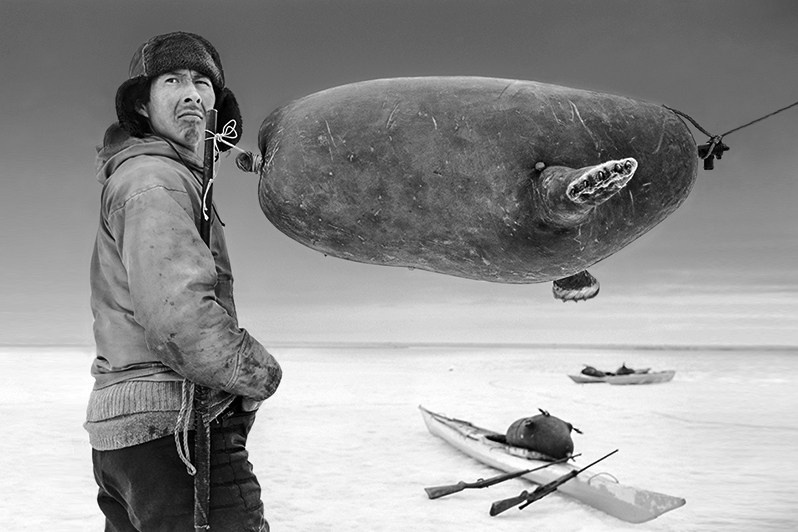
Hunter, Ingelfieldfjord, Greenland © Ragnar Axelsson
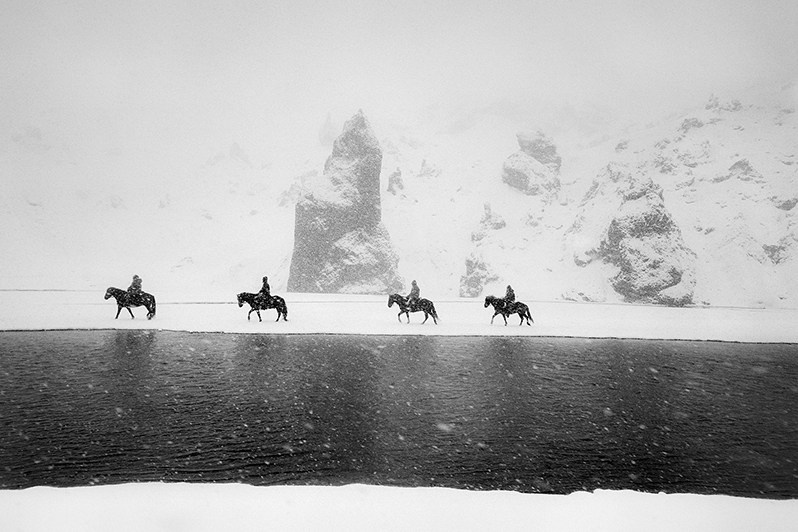
Behind Mountains, Iceland © Ragnar Axelsson
Shapiro: Okay, so you’re working full-time at a daily newspaper. How did you manage to get this incredibly rich and revealing body of work?
Axelsson: I once traveled to Africa for the newspaper, and I looked around and thought every photographer in the world was there taking the same photographs. Since I had always been interested in the Arctic explorers, I decided to go to the north instead, to the cold areas. The paper agreed to let me [shoot there a few times], but I wanted to do more and they didn’t want me to. So I went whenever I had a vacation. I went again and again, and over and over. But it was expensive, and I didn’t have a lot of money; I sold my car just to be able to get there.
Shapiro: When did climate change become your focus?
Axelsson: I wouldn’t say it is my focus. I leave it to the scientists to tell us what is happening and why. I’m documenting the changes in the Arctic.
Shapiro: Okay, but—
Axelsson: Around 1986, I flew to Qaanaaq in Thule, a tiny village on the coast of northwest Greenland, and met an old man. He was outside, in front of his home, sniffing the air, saying something to me in Greenlandic. I didn’t understand a word, so I asked a teacher in the village to translate: “There is something wrong, ” the old man was saying. “The big ice is sick.” He was talking about the ice cap, the Greenlandic glacier. That’s when I started thinking, Oh, I have to photograph this.
Shapiro: So how did you approach it?
Axelsson: The first picture I took was of the old man because I sensed I had to do something, just for myself … or maybe for the world to see later on. But that’s eventually why I quit the newspaper: The Greenlandic ice cap is melting at the rate of 30 million tons an hour, and it’s become a kind of race against time to document things—these people in their environment, their way of life, their traditions—that are disappearing forever, that will never come back. The sea ice is thinner, and it’s become more dangerous for the hunters, so the small villages are being abandoned. Fourteen have been abandoned. It is happening. The wind and weather is taking over the houses.
Shapiro: It sounds emotional …
Axelsson: I feel like I’m walking through the pages of a book most people only read about. On the east coast of Greenland, I’ve visited some of what might be the most remote villages in the world. There’s like 800 kilometers [500 miles] between villages. Three or four years ago, I heard that the last man in one of the villages, Cape Hope, was sick—he had cancer—and was leaving. I went with Hjelmer Hammeken, a hunter-friend of mine who I’ve known for 34 years, to pick up the old man, Jens Emil, who was moving to a big village, Ittoqqortoormiit. As we were walking away, Jens turned back. There was sadness in his eyes. He was afraid. He said something—I always write down what the people say—he said, “There is no hope in Cape Hope anymore. It’s over.” When he looked back, I took a picture and got the expression on his face.
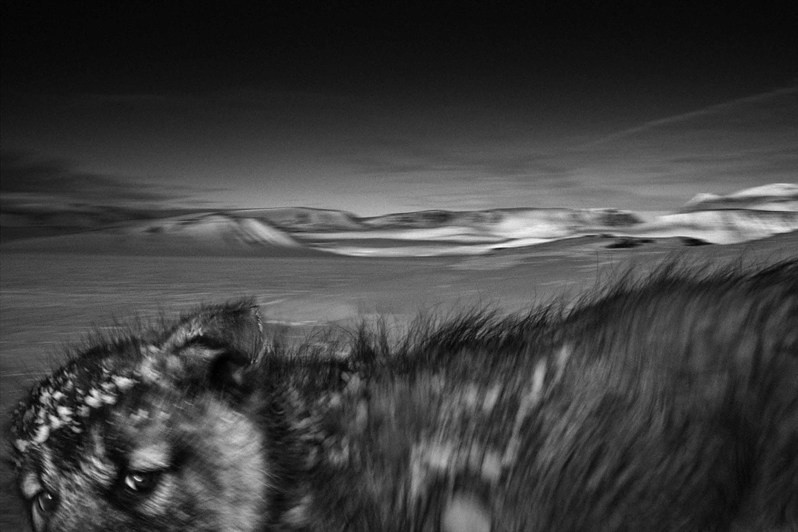
Arctic Heroes, Scoresebysund, Greenland © Ragnar Axelsson
Once, I was out for five weeks—everythingaround
me was just ice—and after three weeks, Isaw a plane
fly overhead. I realized I didn't knowif anybody was
alive on the planet. Was my familyalive? You have
to push those thoughts awayfrom you.
Shapiro: Why are you drawn to shooting, as you’ve described it, “the edge of the livable world”?
Axelsson: When you travel to the north of Greenland, the hunters still wear polar bear skin clothes. It’s like you’re going back 100 years in time. And the Arctic is incredibly beautiful. Take the Roscoe mountains [in Greenland]. More people have been on the moon than in these mountains. The Roscoe mountains are a bit north of the village of Ittoqqortoormiit, which is where my friend the hunter Hjelmer lives. [Axelsson’s next book, tentatively titled, The Hunter from Ittoqqortoormiit, focuses on Hjelmer, whom the photographer has shot for more than three decades.]
Shapiro: In many of your frames, I feel a sense of deep loneliness, a sense of a big environment and a smaller life within it. Is there something about loneliness that attracts you?
Axelsson: I don’t like to be alone photographing for a long time, but, yes, I am attracted to photographing those characters and the people in this environment. Once, I was out for five weeks—everything around me was just ice—and after three weeks, I saw a plane fly overhead. I realized I didn’t know if anybody was alive on the planet. Was my family alive? You have to push those thoughts away from you.


Shapiro: How do you train for being in a place that isolated, for spending four, five weeks on the ice at temperatures that … How cold is it?
Axelsson: Twenty-five below, sometimes colder. That’s Celsius. But I’m pretty fit, actually. A little like Keith Richards in that way. I walk a lot, play football. I do train before I go. I swim in the ocean.
Shapiro: For endurance?
Axelsson: No, no, to get the feel of the shock. Because when you’re out there, you’re jumping from iceberg to iceberg and if you fall through a crack in the sea ice and into the ocean, you have to get out quickly. If you’re not prepared for the shock of the cold water, you’re in trouble. Out there, you’re not allowed to make mistakes.
Shapiro: You haven’t fallen in, have you?
Axelsson: Three times. Once because I was trying to save the sled dogs that had fallen in. But I was picked up immediately by the hunters. It was minus 25° Celsius [-13 Fahrenheit] outside and my clothes were wet and heavy. You have to get a tent up and get inside right away.
Shapiro: Have you had other close calls?
Axelsson: I was on the sea ice with a hunter named Mads Ole, from Qaanaaq, and we were heading home. It was an extremely cold day. The sun was going down, and there was a strong wind. The cold was biting, and it was minus 48 degrees Celsius [-54 Fahrenheit] with the windchill. I wanted to take pictures of him, in action, in his skin clothes. When he stopped to look for polar bear tracks, I saw the moment happening. But I was wearing big gloves—it was like shooting in boxing gloves—and I couldn’t find the shutter. So I removed the gloves. It took me 10 minutes to get the picture, and by that time, my hands were all white. Then they turned black. I almost lost my thumb. I asked the hunter I was with, “Does this ever happen to you?” He said, “No, we’re not stupid.” I can still feel it; it still feels numb. A doctor told me that if the thumb freezes again, I’ll lose it.
Shapiro: Worth it?
Axelsson: I look at the photograph, and it’s like, “I hate you … but I love you, too, ” because I got the moment. It was something I felt I had to do. You’ve traveled a long way to get these photographs so you can’t just relax. To get the pictures you dreamed of, sometimes you have to torture yourself.
Shapiro: Actually, how do you manage to shoot with big gloves?
Axelsson: It’s very difficult. I have this little screw I had put on the shutter to press it, so it’s raised, and like a little dish. That day it had fallen off.
Shapiro: And the time you fell in, what happened to your camera?
Axelsson: I ruined it.
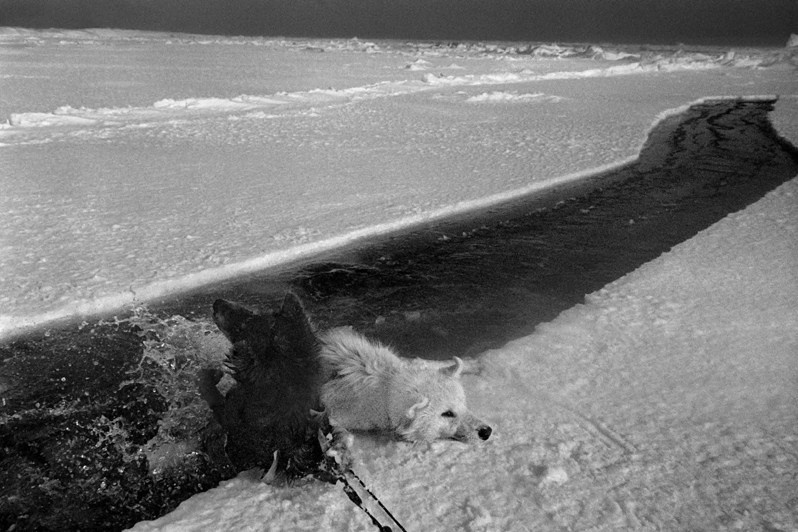
Arctic Heroes, Greenland © Ragnar Axelsson
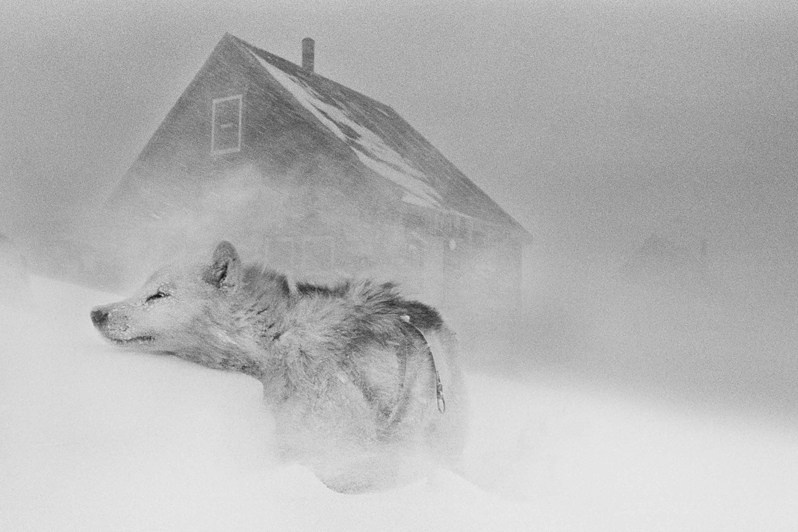
Storm in Ittoqqortoormiit, Greenland © Ragnar Axelsson
Shapiro: How many cameras do you typically bring?
Axelsson: Three or four, but I mainly use one or two. Leicas, mostly. I never use long lenses. I walk close to everybody. My zoom lens is my feet. But you have to be very careful with your camera in this cold. You don’t take the camera in the tent because it’s warmer in there and the lens will fog up.
Shapiro: So what do you do?
Axelsson: You keep the lens in plastic bags and then bring it in; or you keep it outside. Of course, in that kind of cold, the camera’s batteries drain quickly. I have a solar-power tool to charge them but I always bring film cameras—I love shooting film—even though I’m using digital more than I once did. You know, it’s still exciting when you shoot film, and you see the pictures, it’s like opening presents on Christmas. I have more than 15,000 hours in the darkroom but it’s still, “Did I get the moment?” Now, everybody’s looking at the back of their camera and can instantly see if they got the picture. I kind of don’t like that because when you’re looking at your camera, you’re missing another picture.
Shapiro: Does bad weather lead to better pictures?
Axelsson: It’s what I like the best. It’s the most rewarding. Sometimes it’s very hard to photograph during this weather, but if people are outside, they’re focused on doing what they need to do so you get the moments as they happen.
Shapiro: You’ve been doing this for a long time. What’s a lesson you’ve learned along the way?
Axelsson: I met Mary Ellen Mark when I was 19 or 20 at one of her workshops. One day, I was photographing something and then I lowered my camera. She said, “Why did you stop?” I told her that I had the picture. She looked at me and said, “No, you never have the picture. Keep on taking pictures.” About seven years later, my friend Hjelmer, the hunter, and I were heading home after having been three weeks on the sea ice, and it was very cold. I was trying to catch him when he was looking back. I thought I had it, and I was freezing, so I packed up the cameras. Then I remembered what Mary Ellen said: Keep on taking pictures. And I was talking to her like she was there. “Do you know how cold it is here, Mary Ellen?” And she said, I don’t care. Keep taking pictures. So I was cursing in the cold and taking pictures.
Shapiro: And?
Axelsson: And that was when I took the photograph that was the photograph. Because the pictures I thought I had weren’t the right moment. So I’m grateful to her for that because otherwise I wouldn’t have got that picture, which is kind of an important photograph for me because it shows Hjelmer as a person. When we were on the sea ice, he was always on watch. He could spot polar bears that I didn’t even see.
Shapiro: A gift from Mary Ellen.
Axelsson: Mary Ellen was a good teacher and a great friend.
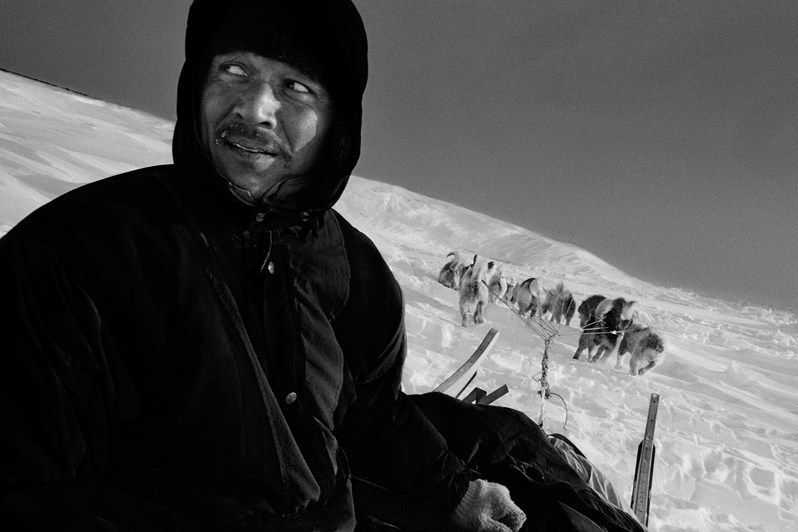
Hunter Hjelmer Hammeken, Greenland © Ragnar Axelsson
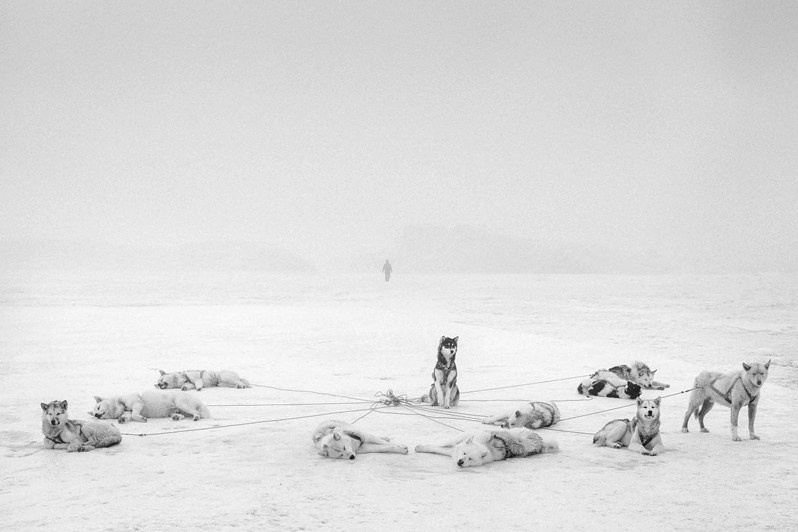
Sled dogs on Sea Ice, Thule, Greenland © Ragnar Axelsson
Shapiro: When I look at your pictures, I see this fascinating relationship between people and environment. When you’re composing the frame, what do you look for first—the person or the place?
Axelsson: I look for the expression on their face, but I’m very aware of the environment. I try to let things just happen as they happen. I position myself and then I wait for the moment.
Shapiro: What elements have to line up to make a picture successful?
Axelsson: That’s a very difficult question!
Shapiro: I know.
Axelsson: You’re mean!
Shapiro: I am.
Axelsson: Okay, for me, a successful picture is one that’s saying something. Like in Eugene Smith’s photographs. It’s … it’s … it’s as if they’re alive. It’s a moment that he got but it’s also the light in them. For me, it’s the expression on people’s faces and it’s the light.
Shapiro: You don’t shoot color. Why not?
Axelsson: Well, there are no colors there. It’s only white and blue. I like pictures in black-and-white because of Eugene Smith and because I like being in the darkroom and seeing the magic happen when you process a photograph. For me, black-and-white is just stronger, with fewer distractions. And also I am kind of stubborn.
Shapiro: I want to ask you about one more picture. It’s the first photograph of yours I ever saw, the one that hooked me: The bearded man looking away from the rough sea. The composition isn’t traditional and—
Axelsson: It just happened like that. Gudjon Thorstiensson was a farmer and I had been photographing him for some time. We went down to the beach because he was looking for a mink that was killing his eider ducks. He was angry about that. There was a mist in the air, and I was waiting for a moment when the waves were hitting the rocks, and I was waiting for his expression and that anger toward that mink. And it suddenly clicked, and it worked as a different kind of frame.
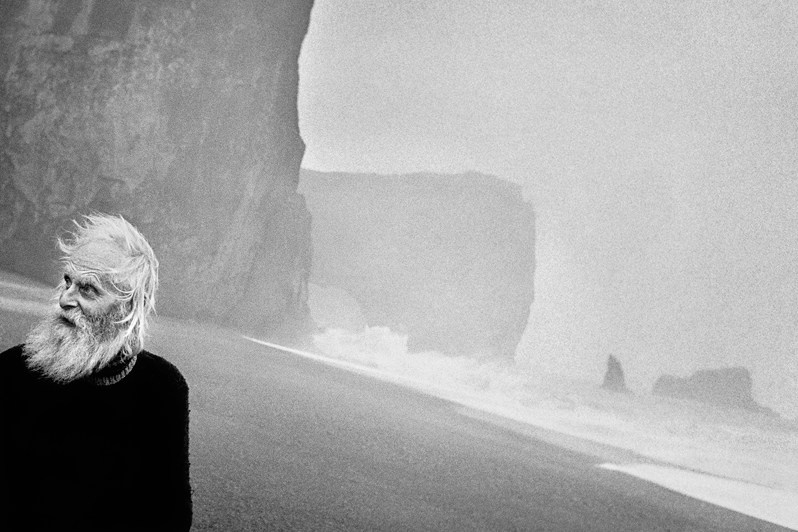
Gudjon Thorsteinsson Farmer Iceland © Ragnar Axelsson
Shapiro: I can’t even say how many times I’ve seen this photograph over the years.
Axelsson: That photograph changed a lot for me, because suddenly people started taking notice of my photos. It was as if I’d ended up in The Beatles—it would have been my ‘Yesterday’, you know, a hit. But then you have to write a new song and move on. I have a photographer friend, and he tells me: ‘When we go out, we always get good shots.’ And I’m like, ‘What? I never get any good shots! ’ I try to get a good shot. But, you know, it takes a lifetime.
You can view more of Ragnar Axelsson’s photographs and books here.
Conversation recorded by Bill Shapiro
September 2025
Other articles
Meet These Photographers
Noga Creative Union
Raúl Cañibano
Meet This Photographer
Misha Maslennikov
Meet This Photographer
Pavlos Kozalidis
Meet This Photographer
Kristof Huf
Meet This Photographer